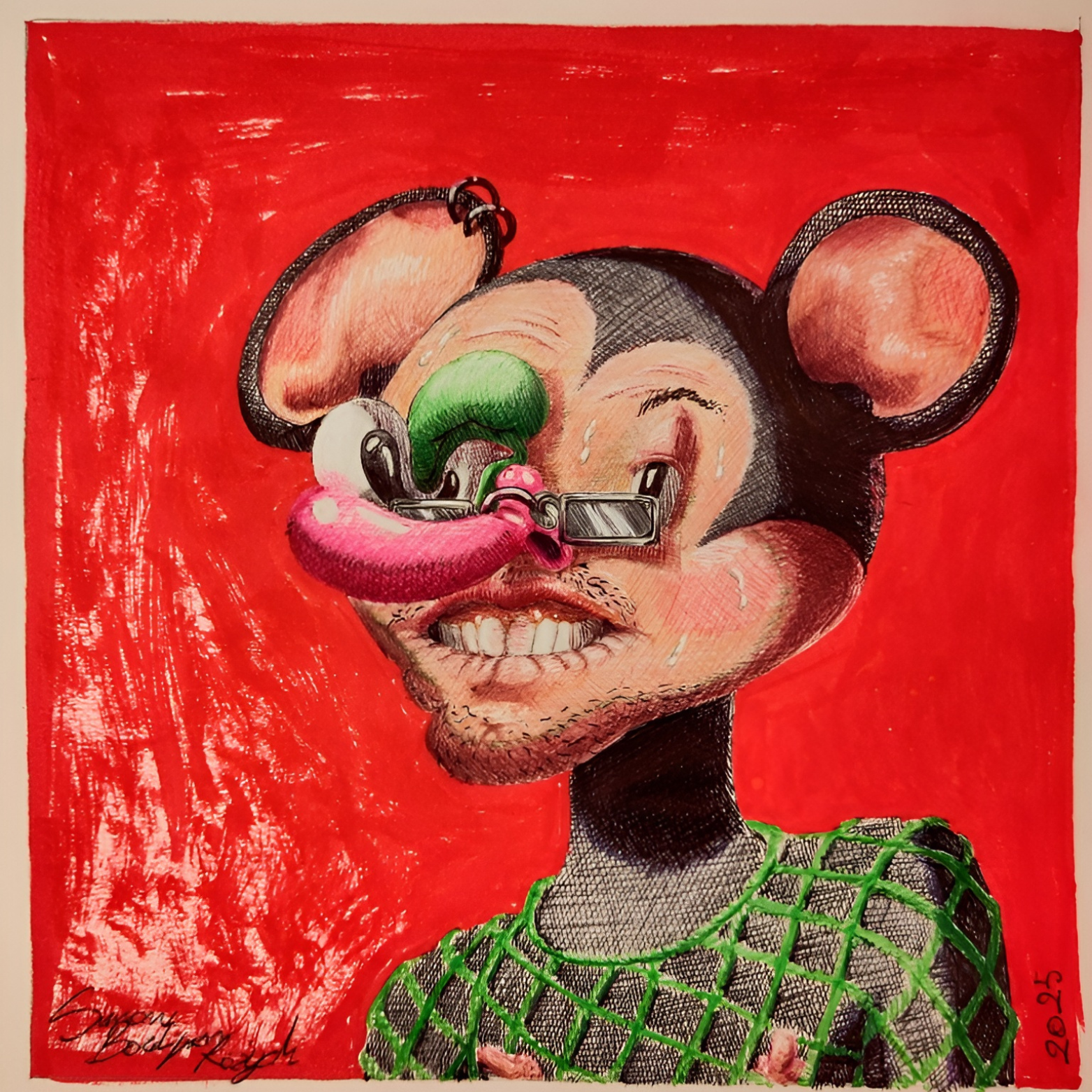
I looked over to the lady at the register and I thought I saw Mickey Mouse in drag. Not fun, sexy drag; scary drag, Norman Bates drag with a hint of decay. The whole thing was throwing me off. Where the fuck was I. More importantly, where was this artist I was supposed to interview. I’d stayed up making sure I was well versed in this specific brand of Disneyfication, I suppose it was meant to be sincere or something. I’d carved that little note on the side of my cranium to lean on sincerity rather than escapism. “We don’t want to dig too deep. Get the content.”
It was 11:30 and I was waiting at a German rest stop. I paid too much for the coffee and burnt my tongue too fast to draw any enjoyment out of it. The truth was this artist never showed up. At some point a small child stumbled in tightly gripping a Labubu. I hoped it might trip and bounce off the thing. “Who dies if Labubu lives?”
Here’s the thing, we’ve tamed the world and domesticated ourselves into a collective quest for an orgasm. Meanwhile, this era’s first big test has come around and ours has proven a worthy system: “Yes, you can infantilize everything!”
Disney adults, NPC streamers, people who cry on TikTok – these aren’t outliers. They’re the natural result of a world that decided feeling good was the only form of progress left. We didn’t stumble into this; we engineered it.
So we scaled up nonsense. Things that pull you in and leave nothing behind. There used to be a moment when using a computer or understanding a subject meant effort – some threshold to cross. Now the knowledge is pre-chewed. Apps and how-to threads regurgitate everything into pseudo-wisdom. The worker becomes the consumer, the consumer becomes the content.
I looked around. The lady at the register threw me a smile. I felt more at ease about sitting here so long.
So you’re a consumer: what do you want?
Just like me, waiting here for over two hours, having bought a single cup of coffee, what you probably want is the comfort of being told you’re okay for doing nothing. There’s a kind of innocence that comes with being a consumer – a permission slip to stay passive. That’s the quiet deal of our age.
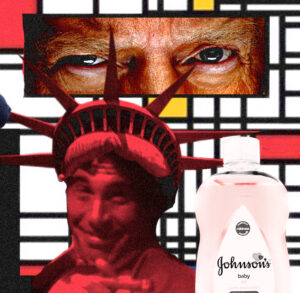
Disney figured this out early. The whole brand was built on the idea that innocence could be sold, that it could fuse entertainment and education into one sweet worldview. It gave people a sense of belonging, a map of who they were, all coated in pastel colors and safety. And when Disney’s corpse began to rot, TikTok took over the business model – looping back the same dose of childlike wonder in bite-sized shots. Matcha, chocolate Labubus, pastel cafés – every feed a theme park.
Philosophy’s a carousel of one-liners. History’s a stream of infographics. Psychology’s a smoothie of mantras and diagnostic words that never risk confusion. The goal isn’t clarity – it’s comfort. Keep the world simple enough for a child, and you’ve got a perfect market. Someone once said the easiest people to sell useless things to are children. So the trick was to keep adults in a permanent, managed childhood.
The more everything gets simplified, the more allergic we become to contradiction. Complexity feels like guilt; doubt feels like failure. So the market sells us a spotless world: clean aesthetics, clean identities, clean narratives. Childhood. You don’t need to understand anything, pick a side and swipe. That craving for purity seeps into everything: how we learn, how we feel, even how we judge each other. Once you’ve sanitized the self enough, there’s no room left for friction. Just faith, ready to be plugged into the next thing that promises coherence.
And if you can do that, you don’t even need religion anymore. You’ve automated faith.
The Church of Scientology tried this.1 It literally broke into U.S. government offices in the 70s to delete anything unflattering about themselves; an event named Operation Snow White. Turns out that wasn’t even new. Three years after Operation Snow White, the Church Committee hearings dragged the CIA into the light. They’d been planting stories in American newsrooms: “friendly journalists” keeping the mood just right.2 By 2008 the Pentagon had its own update: retired generals fed daily talking points to the networks, presented as neutral analysts3. Now the same idea runs clean. Facebook tweaks moods.4 TikTok hides the ugly faces.5 Instagram sells serenity. The priests just swapped robes for engagement dashboards.
The machinery got smoother. The goal’s the same: erase contradiction, keep everyone calm. Every public space now gets the Disney treatment. Tragedy, politics, genocide – all polished until they fit through the same child-safe filter.
And yeah, you know this. We all do. But that doesn’t stop us from scrolling through war like it’s an aesthetic feed, from confusing empathy with involvement. Infantilization’s not just a side effect anymore, it’s a style of governance. The people in charge learned how to talk like concerned parents: Keir Starmer mentioning football every chance he gets, Giorgia Meloni foregrounding maternity as moral authority, Macron lecturing like a substitute teacher who just wants you to be quiet.
Everyone is waiting for something. Back at the rest stop it was just the same: a bus, a call, this Disney artist. All of us plunged into screens; gently being lulled by the hum of various appliances and gyrating frankfurters. I wasn’t waiting for anything at all. It’d been hours; the waiting was the event itself. Trying to pad out my time. The same instinct overcame the other patrons. We just gotta kill the static a little bit, pass the time. I mean, pretend it’s momentum, you know, it can work pretty well. We all want to be told it’s alright. That someone knows the way. That the system has an adult in the room but who the fuck wants to admit that.
So what do we do? Maybe nothing heroic. Maybe just look. Sit there, with your burnt coffee or matcha and your fried nerves, and admit it’s all a bit off.
- Operation Snow White, 1973 – Scientology infiltration of 136 U.S. agencies.
↩︎ - Church Committee Report, 1976. ↩︎
- NYT, 2008 – “Behind TV Analysts, Pentagon’s Hidden Hand.” ↩︎
- Kramer et al., “Experimental Evidence of Massive-Scale Emotional Contagion through Social Networks,” PNAS, 2014. ↩︎
- The Intercept, 2020, leaked TikTok moderation guidelines. ↩︎