I used to swim during the season of my first love. In a race from sport to sport, trying on new gestures for size, my teenaged body, gangly and bursting with emotion, dove in the Podoli public pool, doing laps with plugged up ears, muffled shout from the trainer to push my freestyle stroke all the way up, behind the hips – voices outside plugged up ears.
Chilly blue water offered no respite from winter outside, back when winters were a little colder, a little more bone-chillingly felt than our current one-day snow, bound to melt the same day. In these winters the cold would follow you on the way to the pool, rubbing hands as soon as you got off the tram, walking those six hundred metres from where the fifteen stopped to the colossus of tile and glass, a little steam huffing, red cheeked, the polystyrene crack of shoes on snow. Then through the hour wait, swimming at five started two hours after school finished, staring out the big glass window of the pool bar, I’d retrace my steps weekly, for all their nervous bathroom breaks and lines to get a chlebicek with eggs from stone-faced canteen ladies.
All of my wait was dedicated to thinking about the cold that preceded, succeeded, and was inherent to swimming, that most unpleasant moment when you had to enter the water, be enveloped by it, in a new, sick test of human resilience under anabolic white lighting. It made me feel like I was in a lab.
I’d plunge in, thrust by a trainer’s shout, sensing my body shrink first, before the violence of habit expanded into a stroke. I had to remember to extend my freestyle behind the hips, curl my hips to bolster my leg’s kicks. Eventually I’d dissolve into the water, as was the ilk of my teenage years. I’d find myself enveloped by ever-shifting patterns or identical tiles beneath, hurried glances above to take breaths, the rhythm of the place.
After, I’d leave into the winter again, smoke a little cigarette, and see the smoke dance with steam, the winter stood so large as it accompanied me.
I’d hold onto that warm sight, check my phone for messages, heart strung up with love, in knots that unwound as I let her know swimming went well and that we’d call at home. I returned to the tram stop as a lonely little fireball in a winter that left nothing unbothered.
The following day we’d kiss in the morning waiting for the school bus, behind a column, hidden, hungry, needing to be seen.
It’s only now, recently, years later, this summer, that I’m moving back to Prague, welcomed back home, as an adult, a new, fuller person, the people in my life renewed and changed. At least five springs have blossomed since afternoons slid into evenings at the pool, since me and all those of my age were first in love.
Everyone I know has since enjoyed trips anew, their first fracturing of experiences into a dozen, if not hundreds of faculties, different jobs, scattered around cities, around the globe, a hundred little fireballs burned out on their first go. Life didn’t end there obviously – and with my return to Prague I knew for sure that me and her and him and her and just about everyone hadn’t been alone in experiencing what we did as kids.
I meet F. in Prague. It’s his first time here, and he graces the city with his long stride, those hungry blue eyes, like lakes the city seems to sink inside of. I take him to places I like and claim to love, a little confused by the minute shifts that occurred all over, tectonically minute, but on a human pace, taking place over months, years, not ages. I see tram tracks laid where my school’s bus stop once stood, corner stores grow deli annexes, and armed with a mental map that seems ever hazier, us being lost or taking a turn too late or too soon is a real threat behind every corner, lurking behind every vaguely similar row of imperial style homes.
Still, we enjoy our trips across the city, romping to the beat of verses that F. continues reciting enthusiastically. He carries with him a little booklet of Riike’s elegies, his hand drawn to it during every moment of silence. Hymns that we begin to quote, to repeat, a mantra for our trip. We land on the trail of Prague literature, since that’s also how we met, whilst he was reading poetry and I was mourning, I approached F. two years ago, and we made fast friends.
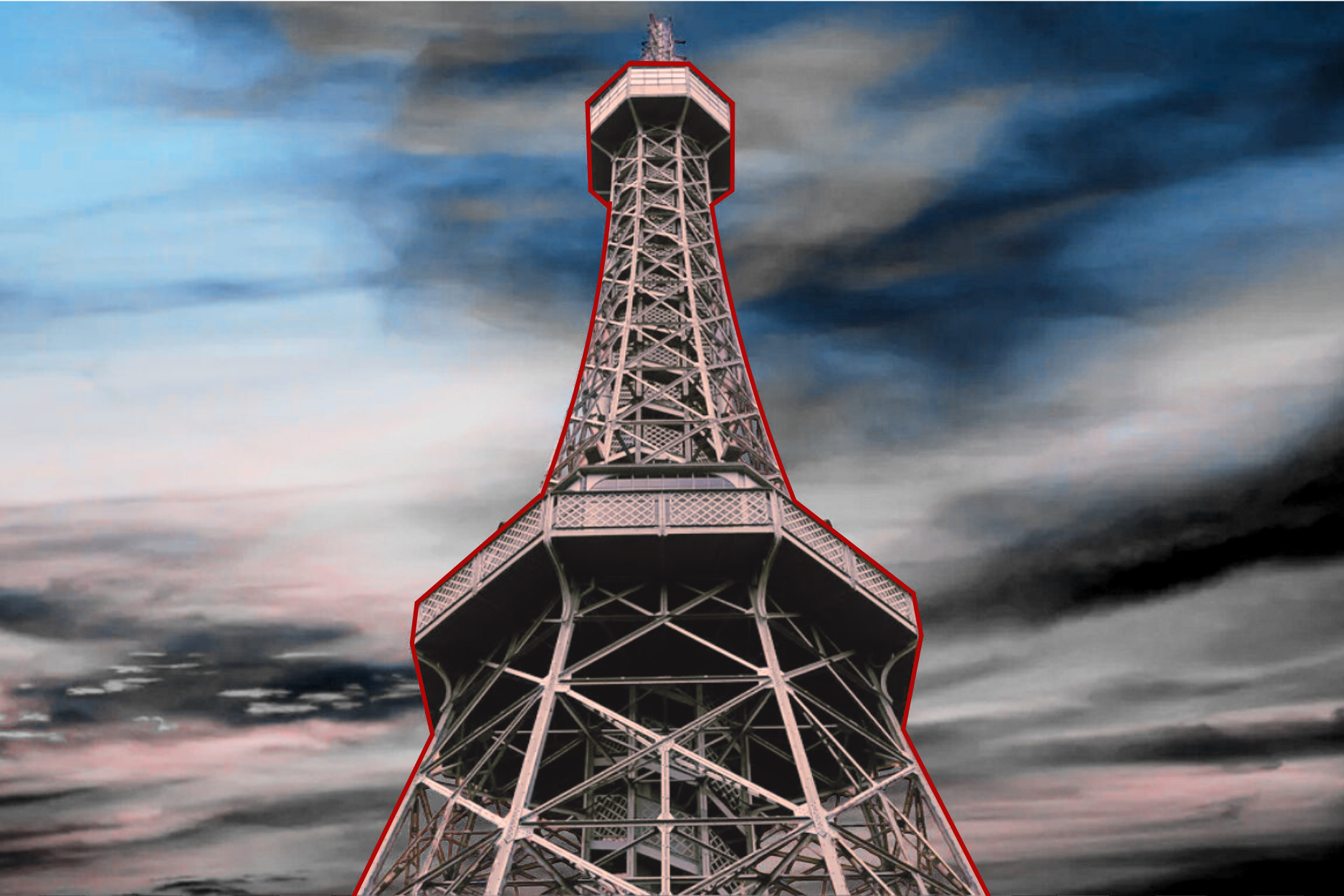
F. liquidates every wrong turn as an adventure, forcing me to live his poetic ideal with every breath. He whispers of beautiful women that we’re about to meet, of hills that our feet will caress, and I begin to see Prague as he sees it. He loves Kundera, the Unbearable Lightness, he wants to see the Petrin of Tereza’s dreams, and stubbornly insists we scour a store with a sign of a woman in a bowler outside. My original sincerity in seeing the sites seems ridiculous in comparison to the artifice of poetry that gives his Prague a glowing sheen.
I settle into it, I too love the book and the writer, with the latter less than F. and the former far more. The book was recommended to me by my first love, my love for the book confused at its source. Yet I love the author, and I enjoy the book, letting F. take the reins, I serve as guide to a city he doesn’t know but that he loves. We watch the movie adaptation, we discuss passages, we read Riike, and by our third day, when we reach Letna, the birds of fortuity have begun fluttering in the trees, letting their little wings carry us to coincidences unforeseen.
Their chirps take us past Stalin, where a granitic titan to the Soviet autocrat briefly stood, now replaced by a skatepark with its fauna of vagrant-seeming youths. I speak to F. about it in excited tones, torn halfway between the truthfulness of my excitement and my real, confused, even ambiguous relationship to the spot. In the last few years I’ve mythologized the place for its story, the near constant political manifestations there, and the brief moments I actually spent there as a teenager blend into the weighty history I’ve submerged myself under.
But what really gets to us is the lake. The artificial lake built God knows when, just when I was gone, massive and surrounded by people, browns and greens of immobile water and grass paint our sights as we near it.
F. is obviously excited. Mountainous in origin, driven to nature, enjoyer of it even when its built, he’s not one to deride what man has molded compared to the real thing. He liquidates my hesitation, saying it’s water, it’s beautiful, let’s enjoy it.
He forces me to lay down with him, tan a bit, break our schedule and our stride. Strip and jump into the water in our boxers, slowing us down to a halt as we dry in the burning sun. He breaks out into song the way he’s happy, treats the carps enjoying their natural muck as miracle, and before I know it I am soaking wet and invigorated by life, by being broken from my stride, doing something I’d never think of doing but always throw an eye at, and I’m feeling extroverted, like I want to do something else that’s new, unusual, to embrace my current mood.
F. tells me there’s two beautiful girls that set their sights on us, so I ask the two girls for a smoke, egged on by him. First just the two of them smoked, now all four of us have lit cigarettes. Their streaks of smoke tangle in the warm air, remaining on us, enveloping us in grey and blue fumes, our feet cooling in the water. We let the heat settle over us, and enjoy the view. Of our brown lake and new people feeding our eyes, and it’s only once we get tired that we lay down, coupled up, each savoring the day’s luck, the birds of fortuity begin their song. The two girls talk to us about coming to Europe from New Zealand, and taking a two day stop in Prague. They’d planned a one hour romp around the lake before we descended as a distraction, and now it’s been half their day – and seeing the way I’m clicking with the taller of the two it might turn into her night too.
Hearing her talk I marvel how just my desire for a cig turned to two fifths of her Prague trip, swallowing up that much of a city that made my life. She’s telling me about her work with indigenous communities, the rainy, windy weather of Wellington, her brother, born two years before her to the day, by the time we leave home, along with the taller girl coming with me, without her friend. Spurred on by F. it’s eight p.m.
He says goodbye to the other girl in curt fashion before she coordinates in hushed, conspiratorial tones with her friend. He rushes our conversation into a bus, where he sulks a step aside. I ask him what’s wrong, what’s there not to enjoy about the rhyme of a day like this, where the birds of fortuity shone on us and made us a memory for these girls’ trip.
He says he didn’t feel them, didn’t like them, and his reasons are evasive and thin. I quickly realize the other girl simply wasn’t interested in him and it’s grating him. And as much as it smears the shining sheen off his curious, wondering eyes, I’m still having a good time.
Now I’m the joyful one, living life in verse, making love until in at six a.m. the next morning she kisses me goodbye. And with me to Prague, her idea of it tied to me, to the lake, for at least two fifths of this miniscule part of her overarching holiday of sixty days out the thousands she will live. We part ways having known each other and just a little bit things have changed, for me, for her, for me and her and the newly built lake. I know of Wellington, of the bar culture, of her hippie parents, and of her great big trip. That she loves Circe and thinks Odysseus was a dick. She knows of Prague, my family, she’s seen my home. Maybe in Budapest, where she’s headed next, in an antique store, she’ll spot a piece of furniture that’ll remind her of my own.
The morning after, the morning of F.’s last day, we meander across the broad streets of Vinohrady, the streets accommodating sunrays so thick and tangible I feel I could touch them. He’s still complaining about the girls from the previous day, bemoaning how boring they were, how banal in their taste, and how we wasted our time, but now it’s falling on deaf ears. Instead I drag him to grab an ice cream, a coffee and poppy seed cake at the corner bakery facing a towering gothic church, in which we light candles, silently praying each for our own selves.
I’m now leading the way, letting F.’s Riike quotes guide my heart, taking him on streets I claim contain beauty, an adventure, love lurking behind their every turn – endlessly hoped for but never disappointed by its absence once a street turns out to be just that, a street.
Eventually we reach a ramp of stairs. Grey, peeling and peppered with tags, we climb them to see a mosaic of the greying moldy kind, where the tiles are cracked and the gaps between them enlivened by moss. It’s a public swimming pool I have no memory of.
By Riegrovy sady, it’s nestled into the side of a beautifully curated park, standing as a strange tiled cement behemoth next to its frilly green companion, together and starkly apart. We sit at the pool’s bar, on an uncomfortable bench at the only free table, switching places every twenty minutes to not wreck our backs on the worst of the two benches, treating it like a lectern, where the one who’s uncomfortable must read. Riike, Tondelli, we summarize the holiday so far with her sights. The atmosphere relaxes, and the fading summer seems to guide our conversation, backwards, facing seasons of love.
And as we mention Petrin, where Kundera wrote Tereza as being chased in her dreams, we notice a detail that had so far escaped us. Sat as we are, trying to avoid the worse seats, our table, the table number nine, appears to be numbered six from our side, the number of the table Tomas sat at when he met his wife. We laugh about it and look up, and there she is, an American tourist, sat down, leaning on her boyfriend’s shoulder, lazily leafing through a book, there it is, The Unbearable Lightness of Being, whilst we’re at table six, at a bar of a pool, surely it’ll also have a spa, as in the novel did.
It’s only now that I really notice, the birds of fortuity have landed on our shoulders. Because we’re not alone, and where we once burnt as fireballs, hurtful to the touch, we now sit as pebbles or granules of sand, rolling, being blown by the wind through our lives. A little less intense, we can bump into others, on a beach, at a pool, at a spa, and once the wind blows us apart again, we’ll know that the birds of fortuity gave this fleeting moment a chance.